Exile, the Stones, Diane Arbus, & Robert Frank
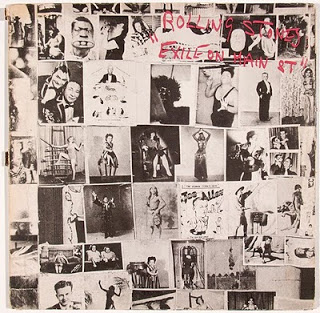
With the Stones re-release of Exile on Main Street this week, I've found myself thinking about how closely tied in this album is with my own relationship to the medium of photography. In the summer of 1971, the Rolling Stones were down in the south of France, recording the basic tracks for Exile. That same summer - on July 26,1971 - Diane Arbus took her own life in her apartment at Westbeth in New York City. Within months of her tragic death - "late fall of 1971" - plans were already underway for a book and a retrospective show at the Museum of Modern Art. This according to Neil Selkirk, who personally made all the prints for the exhibition at Diane Arbus' own darkroom on 29 Charles Street in the West Village (His fascinating essay that is the centerpiece in the "Diane Arbus Revelations" catalog is must reading).
Meanwhile back in the south of France that fall, the Stones had just finished up recording the basic tracks in Keith Richards' rented villa, and headed to Los Angeles for a few months to add background vocals and instrumental tracks. And in early 1972, according to Exile's cover designer John Van Hamersveld, at a meeting with Robert Frank, Mick Jagger, and Marshall Chess, it was decided to proceed with the concept of creating a cover based upon Robert Frank's photographs of a "tatoo parlor" wall, incorporating new photographs of the Stones with some of Robert Frank's photographs from his masterpiece The Americans. That photograph of the "tattoo parlor" wall, was probably taken at Hubert's Museum in Times Square, where Diane Arbus frequented and took many of her photographs in the late 1950's. In fact one of those photographs on the "tattoo parlor " wall - of Hezekiah Trambles, "The Jungle Freak" - was indeed taken by Diane Arbus who at the time was friends with Robert Frank. It would be published in Esquire in 1960, and a print was probably given to Hezekiah Trambles by Diane Arbus.
In New York, in the spring of 1972, Neil Selkirk began the incredible task of printing for the Diane Arbus exhibition and Aperture monograph that would stun the photography world that fall. What's incredible is how quickly this exhibition was pieced together - a testament to Diane Arbus' extreme talent and her friends' love and admiration. Diane Arbus died in July 1971, and the Museum of Modern Art show opened in November of 1972 - just 16 months! The Stones finally released Exile on Main Street in May of 1972. Undoubtedly Selkirk was hearing the strains of "Happy" and "Tumbling Dice" while completing the prints for the exhibition that summer.
In Boston during the winter of 1972, I was taking my first photography course in Boston, which led me down to New York City to see the Diane Arbus exhibition at MOMA that changed my life. I remember it being an intense experience, with crowds lined up to see the photographs. But it was the line up of the photographs themselves on the wall, and the monograph catalog that I left with that day that changed the direction of my life and my whole way of seeing. And I'm sure it changed the dynamic of all who passed through the Museum of Modern Art that winter of 1972 - think of the New York Dolls, think of Richard Hell, think of Robert Mapplethorpe, think of Patti Smith, to name a few - all of whom were no doubt also listening to the Stones Exile on Main Street. I was headed for a career in photography by 1973, studying at Imageworks in East Cambridge Massachusetts, where I was exposed to the work of Robert Frank, Walker Evans, Brassai, Garry Winogrand and Lee Friedlander, to name a few. It was there that I saw my first copy of Robert Frank's "The Lines Of My Hand".
In June of 1972, Robert Frank began filming the Rolling Stones on their tour of America, for his documentary "Cocksucker Blues", which despite Exile's 38 year history, has never been released - though parts of it have made their way into the new Exile bonus documentary. The Rolling Stones kept Cocksucker Blues itself in exile - Robert Frank's documentary was considered too sordid to be released to the public. On April 14th of 1975, while I was still in East Cambridge, I made my way with friends to Wellesley College where my new hero Robert Frank was speaking and showing his photographs. This turned out to be four days after the death of his mentor, the great photographer Walker Evans. His daughter Andrea had recently died in a plane crash. I remember his sadness as he related both those things to us. What he showed us that night, was one reel of "Cocksucker Blues". What he said about Mick Jagger was not very flattering - it had to do with power and fame and the artistic process. I didn't know it then, but I had caught Robert Frank on a particular night at a particular moment in his lifetime. What he said that day in Wellesley (he had been there for an afternoon seminar as well) is quoted extensively in the large catalog that accompanied his recent stunning exhibition at the National Gallery, "Looking In: Robert Frank's The Americans." (I suggest you hunt down online "Photography Within the Humanities" published 1977 by Addison House, which has all the quotes from the Robert Frank seminar that day).
At the end of 1975, I moved to New York City to look for work in photography. When I found it, I began looking for a place to hear music and have drinks. That turned out to be CBGB's. And one night in 1977, while I was hanging out at CBGB's and shooting photographs in the style of Robert Frank (I was trying to turn the CBGB jukebox into all those jukeboxes in The Americans), the man himself came walking through the door . I had no idea at the time that he was living just steps away on Bleecker Street near the Bowery. All I knew was that Robert Frank just walked in past me. I was stunned. He said to me in his Swiss accent - "It seems dat it's important de way people dress here". Dead on. Later, when I was asked who that guy I was talking to was, and I tried to explain that it was Robert Frank - "you know, The Americans" - I got no response. This was not exactly a room full of photography freaks. But when I mentioned Exile on Main Street, which was quite a touchstone album at that time for all of us at CBGB's, and that he did the cover, the response was "Wow - What was his name again?". I told that story in "Please Kill Me."
In those days, the Stones were better known for hanging out at Studio 54, and were being overtaken by the punks in NY and London, who were recording and packaging themselves in the style of Exile. John Lydon would later confess to Exile designer John Van Hamersveld, that "the Exile package would set the image of punk in 1975 - we used that graphic feel to communicate our image graphically". And by1978 the Stones would steal that image from themselves, waking up out of their slumber to record and package the LP "Some Girls".
So here I am now in 2010, sitting and thinking about how all of these things have been swirling around my relationship with photography and music for years. I cannot separate the sounds of Exile from the photographic places I have been. My original LP cover is an artifact that is half Stones, half Robert Frank, with a bit of Diane Arbus mixed in - a photography book and a record cover all in one. Now a bit "Torn and Frayed", just like me. Hey, may I suggest that Aperture do a deluxe re-release of the Diane Arbus monograph, one of the greatest photo books of all time?
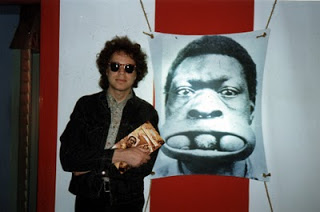
Ripley's Believe it or Not Museum, St.Augustine FL 1995
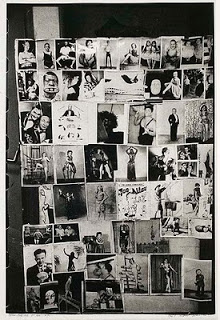
Tattoo Parlor, NYC circa1958 by Robert Frank
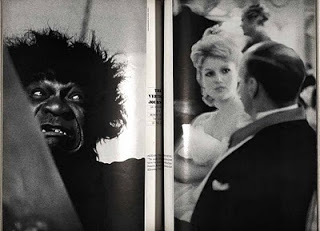
Diane Arbus, Esquire magazine July 1960
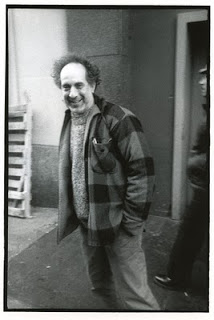
Robert Frank, NYC 1980
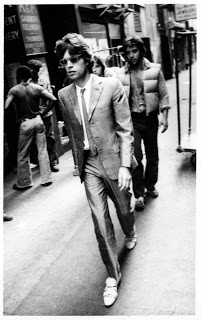
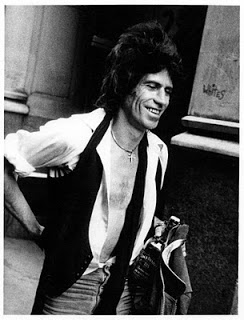
Rolling Stones, NYC 1980
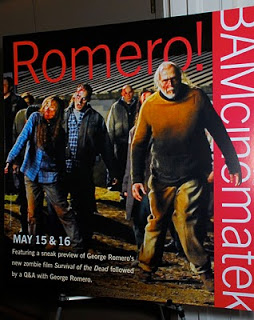
Where I Was At: George Romero at BAM Cinematek 5/15/10
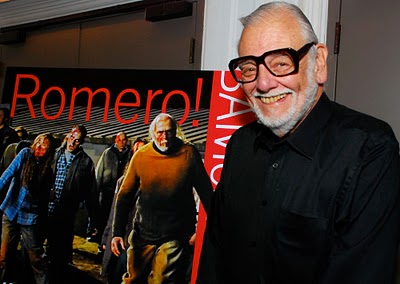
George Romero at BAM
This new film was all action and gore right from the start. Everyone there - though admittedly true fans - loved all the twists and turns of this sixth installment in the 'Dead' series. An excited George Romero sounded like he was ready to make three more of these films right now. In an engaging talk after the film he talked about his love of his "slow undead creatures", the kind you can easily get away from. What these undead in fact do, he said, is expose the very human flaws of those who manage to allow themselves to get caught and eaten by them. Brilliant.
Meanwhile, next door at Brooklyn Academy of Music, the streets were lined with mobile video trucks that were there to broadcast a concert by The National, while Brooklyn hipster music fans roamed the streets like it was their night of the living dead. But where it was really happening was at the Cinematek, where the legend, George Romero, a very talented director who has done things his way for a very long time, showed he is still at the top of his game, and ready to go higher.

all photos © GODLIS
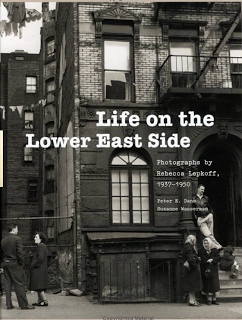
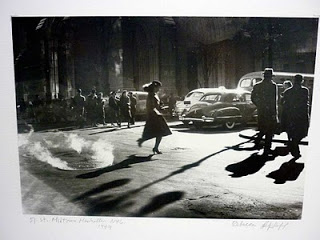
Rebecca Lepkoff - photographer TODAY 5/13 IN PERSON!
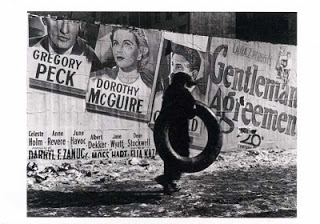
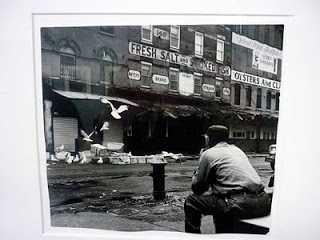
She was in the Photo League in the 1940's, shooting extraordinary pictures on the streets of New York. Today - May 13th - she will be at The Tenement Museum on 108 Orchard Street, signing her book "Life On The Lower East Side". She also has an exhibition at Soho Photo Gallery on White Street in Tribeca, of her vintage prints, where I shot these pictures. She's in her ninth decade, and still clicking madly. Cancel your plans - get downtown today and greet a legend!

ALL Photos copyright Rebecca Lepkoff
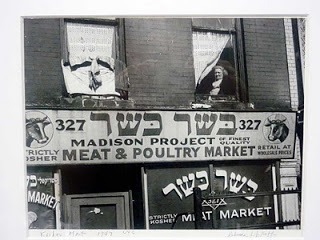
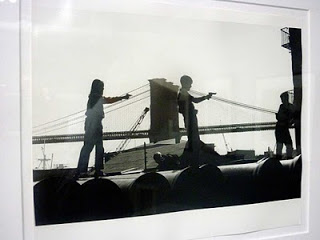
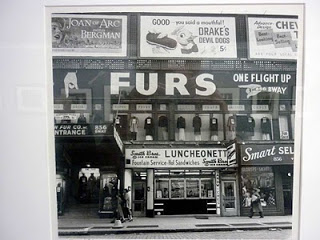
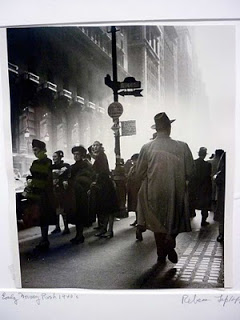
ALL PHOTOS copyright Rebecca Lepkoff
the fifth day of may
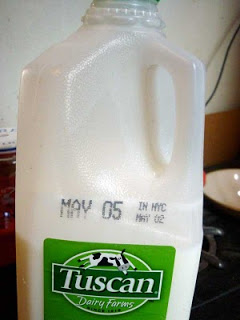
Four days after May Day, you just gotta start off your Cinco de Mayo with a listen to Bob Dylan's ISIS, circa 1975. Opening up with, "I married ISIS on the fifth day of May, but I could not hold on to her very long", this gem from Desire, is an ode to Bob's marital troubles, thinly disguised as a Marty Robbins' gunfighter road ballad. It is must listening every May 5th. Unfortunately for those of us living in the youtube universe, the greatest clip of this song from the 1975 Rolling Thunder tour, is missing the just quoted first verse. But this killer version does include Mick Ronson on guitar, a wild-eyed Bobby Neuwirth facing down Dylan in white face paint, and a very young T-Bone Burnett onstage decades before he won an academy award. As the song's long journey winds down, the last verse is intact : "I still can remember the way that you smiled, on the fifth day of May in the drizzling rain." So go ahead, start your 5/5 off right...
And if you have a few more minutes to kill, here are two more versions. First the White Stripes (Jack White meets Jack Frost). Then a slightly bedraggled Bob Dylan (on tour after one year) doing a full version that includes that wonderful opening verse. Happy Cinco de Mayo pardner.
be there now / cartier-bresson at MOMA


This is an enormous show. Too enormous to take in with only one viewing. Perhaps you want to start with the tremendously engaging online version of the exhibition on MOMA's website here:
Online, you can view and read about the photos in the comfort of your own home. This will prepare you for being in a room with the actual artifacts - the prints made from the negative that was in the camera that was in the photographers hand, out there in the real world.

How do you comprehend how someone could conceive of taking the picture above - made in Cordoba, Spain in 1933? I don't know, but I offer what John Szarkowski wrote about it in his essential MOMA book "Looking At Photographs" "This photograph concerns gesture, line, shape, scale, the flatness of the picture plane, and the difference between art and life. To say that the picture concerns these things does not, of course, mean that it explains them."

All the monumental shots are here. The exhibition starts with an informative introduction to the various printing styles you'll see in the exhibition. But from there you're on your own, moving from room to room and various locations around the globe. The pleasure is in discovering the rare finds among the gems.

I had never seen this picture taken in Mexico in 1963. This is one you really have to see in the gallery to appreciate - like viewing a movie in a theater instead of on your television screen. I stood starting at this one for about ten minutes, and it called out to me every time I passed through the room. You won't see everything on your first visit, but you will find your own new favorites - I guarantee that.
Like this one from Shanghai in 1949. Startling. Wong Kar-wai anyone?

Here are a few from his journeys across America in the 50's and 60's.


I must say that the layout of the exhibition is it's only drawback. The layout is a little too carefully arrayed for my taste. The organization by themes tends to inhibit the pleasure of appreciating individual photographs, if you let it. Don't let it. Just keep your mind on each and every picture, much like they were taken - one by one. Here is a quote from the master himself. It's from the introduction to that same 1968 Cartier-Bresson MOMA catalog:
"Sometimes one remains motionless, waiting for something to happen; sometimes the situation is resolved and there is nothing to photograph. If something should happen, you remain alert, wait a bit, then shoot and go off with the sensation of having got something. Later you can amuse yourself by tracing out on the photo the geometrical pattern, or spatial relationships, realizing that, by releasing the shutter at that precise instant, you had instinctively selected an exact geometrical harmony, and that without this the photographs would have been lifeless. But to apply a golden rule, a photographer's compass can be nowhere but in his eye." - Henri Cartier-Bresson
I suggest that you hold on to this advice while walking through the MOMA galleries. But however you go there - virtually or digitally - be there now. And be prepared, for when you exit the museum, and step out onto the New York streets, everything will look like a Cartier-Bresson picture. You might want to carry your camera and your "photographer's compass". Oh, and btw Friday evenings at MOMA are free.


Where I Was At: January 1980 / Specials Press Conference
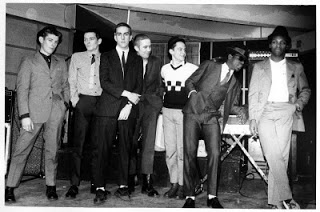
The Specials, NYC 1980
The Specials are in New York City this week for two highly anticipated shows at Terminal 5, so I thought I'd dig into the archives and pull out some pix from their Press conference at Hurrah's on January 25, 1980.
It was a mid afternoon affair, primitive by today's PR standards, that's for sure. I was in the midst of my Garry Winogrand "Public Relations" obsession - that was his show at MOMA of pictures at various press conferences. So I relished shooting this press conference with my flash. Jerry Damners - who is in fact not on this current tour - is seen here alongside the most excellent frontman Terry Hall, making for a "once upon a time" quality to these 30 year old photos - eeek.
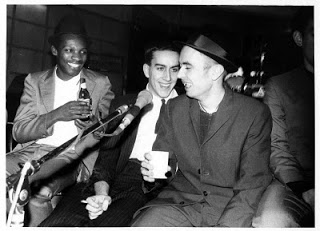
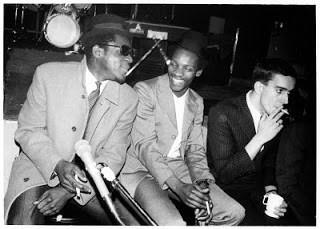
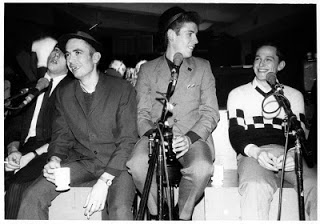
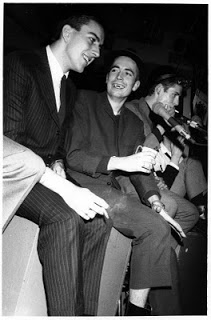
The Specials, NYC Press conference - January 25, 1980
photos © GODLIS
a little more Alex Chilton
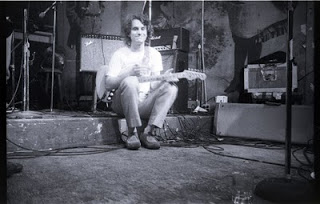
Alex Chlton, onstage cbgb's 1977
Good to see Alex Chilton getting his due in the press this week. And honored to see my photo of him making the rounds. Been digging back through the archives, and so will share a few more pix I uncovered today, while listening to the delicious Man Called Destruction cd (Devil Girl, What's Your Sign, New Girl In School!!!). The color stuff is from the early 90's up near Grand Central Station. The b&w shots from cbgb's 77 days.
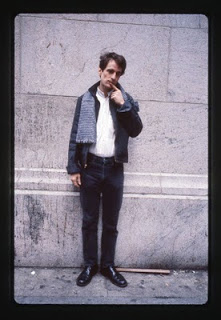
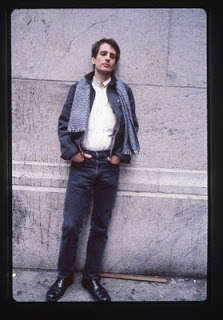
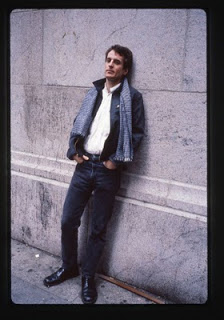
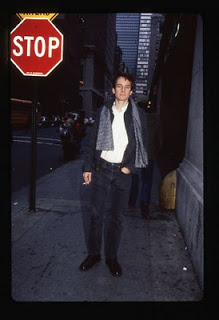
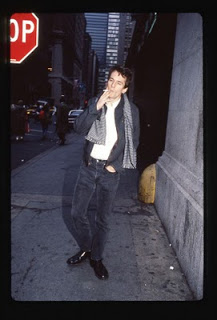
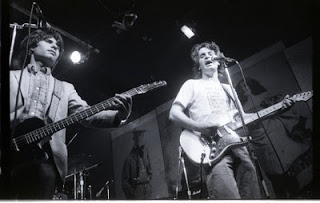
Alex Chilton with Chris Stamey, CBGB 1977
ALL PHOTOS © GODLIS
Alex Chilton R.I.P.
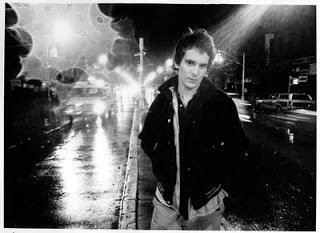
Alex Chilton, Bowery 1977
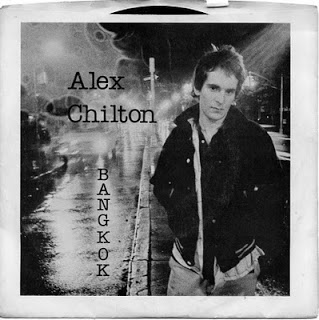
I was just about to go to sleep early last night, when my 17 year old daughter came in to tell me the bad news. Sadie knew Alex Chilton & Big Star through the opening song on her fave That Seventies Show. She had met him about ten years ago (was she 7?) when I introduced her to Alex at a show he played under the Twin Towers doing a Box Tops set. I met Alex in 1976-77 at CBGB's when he was living in the East Village. We were about the same age, which put me in high school while he was the lead singer on "The Letter." Maybe we met at the Ocean Club before CBGB's - I'm not sure. The picture I took there was definitely shot before the more famous one in the rain out on the Bowery. I don't remember whose idea it was to go out to the median strip on the Bowery to do that shot - mine or Alex's. Most certainly it was on a whim or a dare while talking over beers at the CBGB's bar. Definitely not planned too far in advance. Just run out in the rain, and try an idea out, then go back for another beer. We'd tried other shots indoors and out, but neither of was satisfied. So when I developed the film and saw that strange drop of rain that had landed on the lens in what couldn't have been a more perfect spot, I was ecstatic. That was it - and we both knew it. Soon it got used as the cover for his independent single "Bangkok" (with a great version of the Seeds' "Can't Seem to Make You Mine" on the flip side). Maybe Alex had that in mind all the time we were shooting. I don't know.
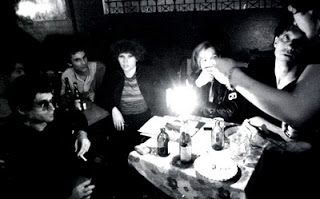
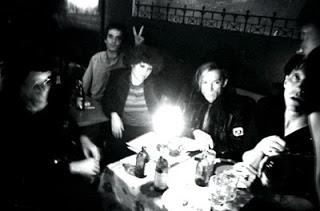
We didn't talk a lot about music on most nights. We talked a lot about photography. His friend William Eggleston's color show at MOMA had just shaken up the photography world. Alex, who was working with the Cramps was well aware of my low-light photography style, and made me do a shot of him and the Cramps by candlelight - a nearly impossible task that amused him to no end. He was playing around town that summer with Chris Stamey, who with Peter Holsapple would go on to form the DB's. He was producing the Cramps first album. He certainly fit right in with the burgeoning NY punk scene. Years later, I did some shots of him at Grand Central Station, when he was passing through town. He looked the same - an eternal teenager, his mind always with you and on something else both at the same time.
This morning, I spent my subway ride listening to Big Star. Lost in the beauty of 'Thirteen' - "Won't you tell your Dad get off my back / Tell him what we said about Paint It Black...Won't you tell me what you're thinking of /would you be an outlaw for my love". Avoiding the gaze of other passengers, I found myself teary eyed at the loss of another friend. Never to be seen again sucks. And then on came 'September Gurls', and I was a kid again. "September gurls do so much / December boys got it bad". We were all kids again. I smiled and walked off the fast train.
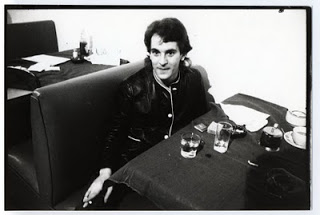
Alex Chilton, The Ocean Club, 1976-77
Alex Chilton with the Cramps 1977
Eternal Sunshine of the Godless Mind


Michele Gondry, director of "Eternal Sunshine of the Spotless Mind', came to town last night for an in depth talk at the Walter Reade Theater (NYC's best screen & projection system). I shot some pix, listened to stories about Bjork, Jim Carrey, Kate Winslet, and the Green Hornet, and got to see his black & white Levi's commercial (with a nod to Walker Evans & O. Winston Link, I believe) on the big screen.
For your viewing pleasure, I present it here...

Michele Gondry, Walter Reade Theater
waterloo sunset revisited
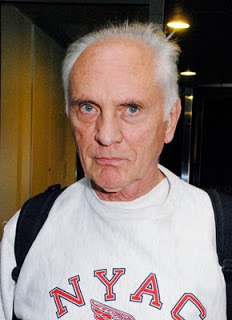
Terence Stamp, NYC 2009
"Changed my life"
This morning I spent my subway ride giving my eyes a rest, while listening - over and over and over - to Waterloo Sunset - an astounding single that just gets better with each listening. Riding the subway, I felt as one with the lines - "millions of people, swarming like flies round Waterloo underground." Then I recalled that the line "Terry meets Julie, Waterloo Station, every Friday night", is reportedly based on Terence Stamp and Julie Christie, stars of the then current film 'Far From the Madding Crowd.' Not the theme song of the movie - just inspired by the whole notion that these two stars were in the film. God save Ray Davies. His songs belong in films - i.e. Wes Anderson made excellent use of "This Time Tomorrow" in his recent 'The Darjeeling Limited', and I heard he checked around with film buffs to make sure it was never used in any films before.
So last fall, when the NY Film Fest was showing 'Red Riding', the British TV version of the very popular serial killer books by David Pearce 'Red Riding Quartet', those in the know showed up for the one-off 6 hour screening. And one of those spotted at the theater was Terence Stamp. My job was to ask him if I could shoot a picture of him. He seems tough, but was very gracious. And though I could not get myself to ask about the Kinks song, I had to tell him that my favorite film of his was Toby Dammit, directed by Federico Fellini, based very loosely on an Edgar Allen Poe tale 'Never Bet the Devil Your Head', in which he plays a burnt out British star accepting a meaningless award in Italy in order to pick up a free Ferrari. Mr Stamps' response to my praise was - he looked me right in the eye and said "Thank you - That film changed my life". He was so sincere, I was taken aback.
And so what does all this add up to? Nothing except that Terence Stamp is way cool and Waterlloo Sunset is an amazing song.
"As long as I gaze on Waterloo Sunset I am in paradise."
Positively Fourth Street - Snow Dazed in NYC - February 1963
Watching the snow - gently falling as they say - after trudging around in it on this winter afternoon. Navigating all the icy slush on the NYC corner crossings, got me to thinking about one of my favorite album cover shots, the Freewheelin' Bob Dylan picture taken by Don Hunstein back on that snowy day in another February in another century - the year 1963.
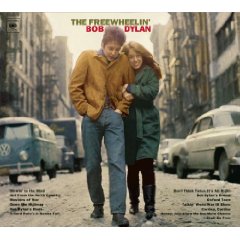
Things don't look all that different around that part of the neighborhood nowadays. Jones Street betweeen Bleecker and West 4th, where the picture was shot is still a pretty quiet block. Just around the corner at 161 West 4th Street is the apartment where Dylan and girlfriend Suze Rotolo were living. So it wasn't much of a hike in the cold slushy weather to do the iconic photo session - ain't that always the way.
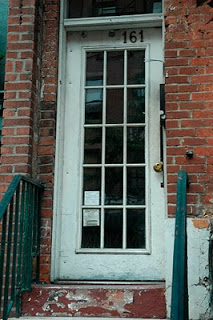
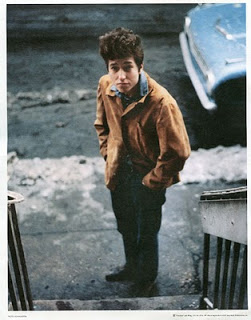
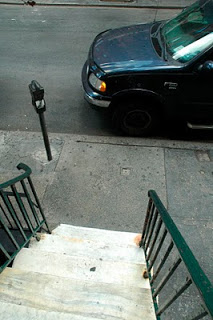

photo by Don Hunstein
161 W. 4th St.
Last summer, when I got a free giveaway photo by Don Hunstein with my purchase of Dylan's recent 'Together Through Life' album, I immediately recognized the location to be 161 West 4th. The little stairway stoop in front of the building hasn't changed that much - as you can see. This photo was probably taken at the beginning or end of the session - leaving or returning to Dylan's apartment. Even the railing is still painted the same color. To see how little has changed in that little spot, while looking down those steps through the viewfinder was to look time in the eye.
1963 photo by Don Hunstein
2009 photo by Godlis
But wait one more thing! At the 2007 NY Film Festival screening of Todd Haynes' Dylan film "I'm Not There", I noticed Suze Rotolo herself - looking like, uh Suze Rotolo, quietly hanging around waiting to say hello to the director. I hesitantly asked if I could step into their moment, and do a photo. They said yes and here it is. Don't think twice, just shoot.
Suze Rotolo & Todd Haynes, NYC 2007
It's alright Ma..."Mother: She'll Stop At Nothing"
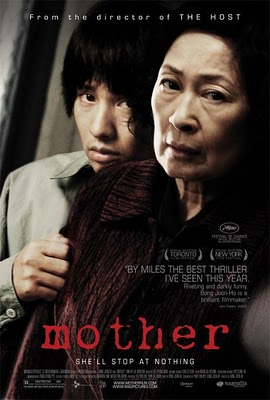
Just that tagline alone should be enough to convince you to buy a ticket to Korean director Bong Joon-ho's new film, 'Mother'. Look at that boy in the poster, that only a mother could love. He's accused of murder, and he's - I'm sorry Sarah Palin - somewhat retarded. So his mother is the only one going to bat for him. And she spends most of the film relentlessly tracking down the real killer - with an intensity that only a mother can muster. Established Korean actress Hye-ja Kim keeps the whole train rolling from the opening shot. Don't miss the begining!
This Friday February 26, Bam Cinematek in Brooklyn is bringing this very cool director to town for a screening of "Mother" in advance of it's March 12th opening, and a five day retrospective of his films. You better not miss it. Snow or no snow, I'll be going out there tonight to see his great early film "Memories of Murder". I saw "Mother" this past fall at the 2009 NY Film Festival, where I took these pictures of Bong Joon - ho. I'll be back there tomorrow to hear him talk in person. You be there or be square.
BAM CINEMATEK BAM INFO
Bong Joon-ho, NY Film Festival 2009 © GODLIS
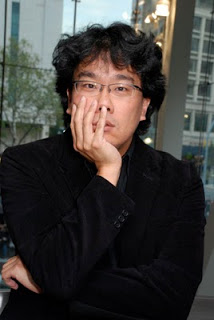
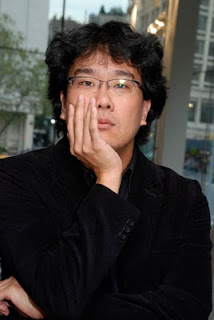
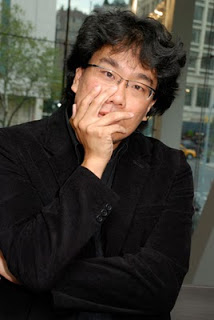
Where I was at: CBGB's June 2006 / Sonic Youth soundcheck
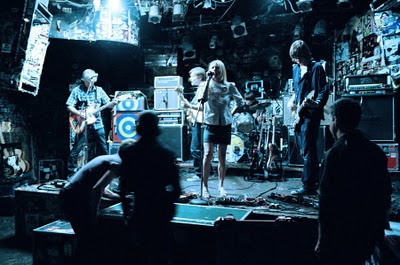
On June 13, 2006 - 4 months before CBGB's closed - Sonic Youth, set to release their new album 'Rather Ripped', played the club, and filmed the video for the song "Do You Believe in Rapture" that night. I was asked by director Braden King to shoot stills during their set to incorporate into the video along, with super 8mm film footage superbly shot by Jem Cohen.
This photo was taken during the sound check that afternoon, before the fans crowded in down front.
Where I was at: Tower Records NYC, October 2005
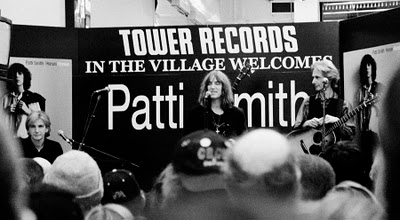
Does anyone remember Tower Records? Does anyone even remember stores? It was October 2005 when Patti did a live performance at the Tower downtown in NYC for the special 30th (!) anniversary edition of Horses. I was digging through some old digital files - you know how they can accumulate and get buried in the intestines of your computer, no matter how good your filing system is - and this one jumped out at me. Man, that looks like a long time ago already.
Mystery Train to D.C. / Return to Sender
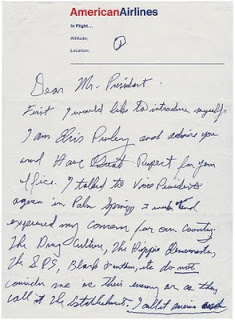
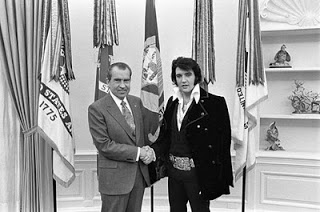
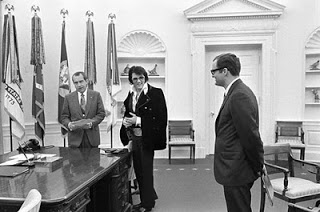
This is just too good to be true. A whole website dedicated to the classically absurd meeting between Elvis Presley and Richard Nixon on December 21, 1970. And it is a US Government website - we the people own this URL! When Nixon Met Elvis
Here is page one of the actual letter handwritten by Elvis on American Airlines stationery, requesting to be made a "Federal Agent at large", explaining that "the drug culture and hippie elements do not consider me their enemy, or as they call it the establishment". There are the notes from Nixon's 'people' advising that it would be "extremely beneficial for the President to build some rapport with Presley". There is the meeting agenda including the absurd suggestion that Presley record an album "Get High On Life". There are photos and outtakes of the "event". And it is all downloadable.
But I'm gonna stop. You've got to take the mystery train right now to this terrific website, and have some fun for yourself.
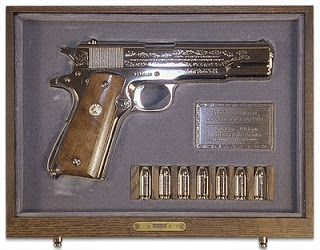
Gun given by Elvis to Nixon as gift
oscar nominations + talking about a potato
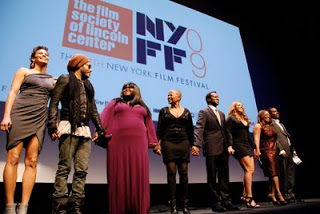
'Precious' cast, director, Push author Sapphire, Lenny Kravitz, Mariah Carey NY Film Fest screening 2009
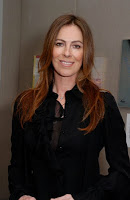
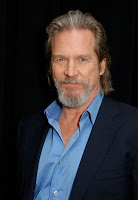
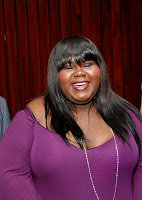
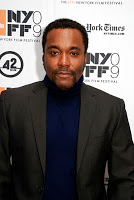
So I'm watching the Academy Award nominations broadcast on TV yesterday morning - to see which nominees I have pictures of / which films I've seen. Of course there were those that were expected - Kathryn Bigelow (The Hurt Locker), Lee Daniels and Gabourey Sidibe (Precious), and the Dude Jeff Bridges (Crazy Heart).
And in the Foreign Film category, the odds on winner is - 'The White Ribbon' by Michael Haneke. This film is a pre-Nazi Germany 'Children of the Damned' Protestants creepy whodunnit. Before the film screened at the NY Film Fest last fall, director Haneke told the very uptown Lincoln Center audience, with a smile on his face, "I wish you a disturbing screening". Don't miss seeing this film on the large screen. For me, just the black and white cinematography was worth the price of admission.
But the most unexpected nomination yesterday - and I'll tell you why in a moment - was also in the Foreign Film category. The Milk of Sorrow was directed by Claudia Llosa. I saw it last spring at the New Directors/New Films Festival here in NYC. I photographed the Peruvian director that same night, and then went in to see the film which was quite good. But I have to tell you that the plot revolves around - and this is a SPOILER ALERT of sorts - a main character who has a potato growing inside her vagina. I'll say that again - she has a potato growing out of her vagina. Really.
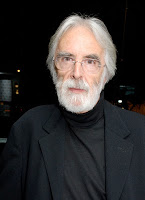
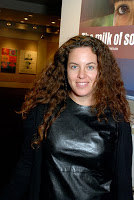
Michael Haneke and Claudia Llosa
through a glass darkly
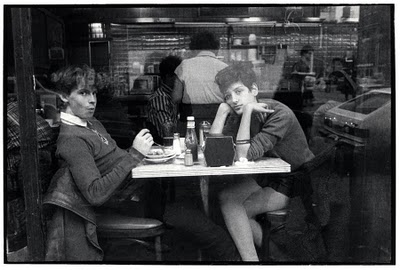
Then in the summer of 1986, I exhibited this photograph with a number of others in a restaurant / gallery space lower down on 2nd Avenue. And at the end of the summer, I received this letter from England written by the girl in the photograph! Beautifully pre-email-ish, with her minimally descriptive drawing - a brilliant companion piece detailing the situation from the other side of the glass - revealing that they were indeed "having a massive row." Like a great turn in a novel, that almost made the picture even better.
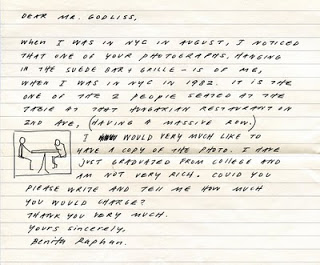
I say so much for invasion of privacy issues. Every picture doesn't really tell a story. Garry Winogrand once said: "Photography is not about the thing photographed. It's about how that thing looks photographed."
Yes, of course, I sent her a copy.
godlis boy pix
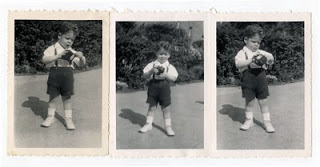
yeah, that's me as a little kid - "godlis boy", trying to make perfect sense of a twin lens reflex. i don't remember that camera or this moment. but because someone took the time to shoot not one, but several pictures of me, totally enmeshed in a struggle to make sense of this little plastic machine, I now actually have a memory of this fleeting precious moment. the camera i do remember playing with a few years later was a classic brownie hawkeye twin lens. a bit sturdier than this one, i loved looking down into the viewfinder and trying to walk around the room using that image as my seeing eye dog. i never really shot any pictures on it.
Actually this is the kind of picture I would have taken - if i wasn't the kid in it. i'm guessing my father took this one (though my mother always claimed credit for taking all the pictures in the family, she appeared in way too many of those same wonderful pictures for her claim to be true). but i'm pretty sure that she picked out my awesome shoes.
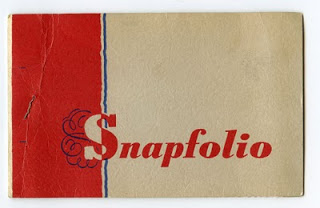
"godlis boy" - years later, in high school, that was my nickname on the swimming team. kinda rolls off the tongue, fun to say. so in the spirit of fun, i present a few more godlis boy pix, from my personal snapfolio collection. dig 'em.
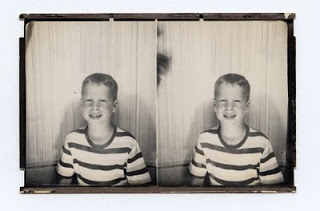
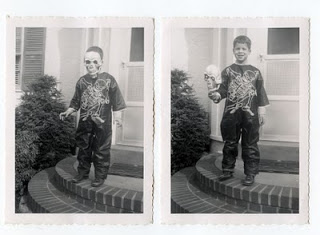
what a chunk o' chocolate

Arnold Stang, NYC 1987
I ran into Arnold Stang out on the streets of New York back in 1987. He must have been on his way to do a voice over for a Honey Nut Cheerios commercial. But to me, he was the voice of the Chunky Chocolate commercial in the 1950's, with the infamous line that's still ringing in my head when I look at that candy bar - "What a Chunk o' chocolate!" He was a riot as the nerdy gas station attendant in 'It's a Mad Mad Mad Mad World'. Played next to Frank Sinatra in 'The Man With the Golden Arm'. And speaking (ha) of voiceovers, he was the voice of Top Cat.
He was a little comic genius. Here's a brief clip for those unfamiliar.
R.I.P. Arnold Stang.
You're Mr. Lebowski. I'm the Dude!

Jeff Bridges, NYC 2010
The Dude came to town Saturday night. Jeff Bridges was up at the Walter Reade Theater for a Film Society of Lincoln Center special evening of clips and conversation, followed by a screening of one of my favorite films 'The Last Picture Show' (hey, not a bad title for a photo exhibition, now that I think of it).
So I ran uptown with my camera on a very cold New York city winter night to get a few pix of his dudeness. The man was so cool and obliging. The Dude abides. 'Nuff said.

Jeff Bridges, NYC January 2010